Cloud Architecture Basics Explained: Concepts & Fixes
Cloud Architecture Basics Explained: A Modern Overview
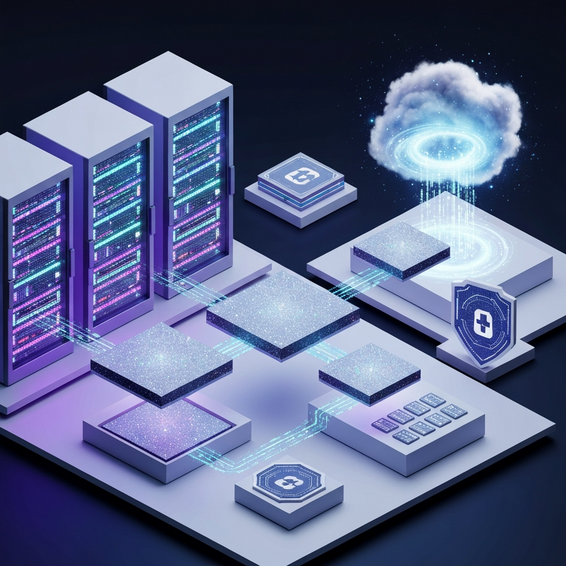
What are cloud architecture basics? At its core, the term refers to the essential building blocks—like front-end platforms, back-end servers, content delivery networks, and data storage—that come together to create a fully functioning cloud computing environment. Getting a solid grasp on these elements is exactly what enables organizations to design systems that are scalable, secure, and highly available.
If you’re currently wrestling with sluggish software deployments or losing sleep over skyrocketing on-premise server costs, you definitely aren’t alone. Welcome to a practical look at modern IT infrastructure and cloud engineering. Having cloud architecture basics explained in plain English is your critical first step toward building a system that can weather any storm.
Stepping away from the comfort zone of traditional physical servers to embrace the cloud often feels overwhelming for developers and IT administrators alike. Yet, taking the time to master cloud computing fundamentals has the power to completely transform your daily DevOps workflow.
Throughout this guide, we’ll break down the concepts you actually need to know and address the most common infrastructure scaling bottlenecks. We’ll also walk through how to construct a robust, future-proof tech stack from the ground up. By the time you finish reading, you’ll walk away with a clear, actionable blueprint for navigating scalable cloud environments.
Why This Problem Happens: The Challenge of Legacy Systems
Have you ever wondered why legacy systems consistently buckle under the weight of modern internet traffic? The root of the problem almost always traces back to the rigid constraints of on-premise infrastructure. Because traditional hardware requires physical, manual scaling, upgrading your capacity is a painfully slow and terribly inefficient ordeal.
When companies operate without a solid cloud migration strategy, they inevitably hit massive bottlenecks the moment traffic spikes. These physical hardware limitations translate directly into unacceptable downtime, deeply frustrated users, and ultimately, lost revenue. To make matters worse, the monolithic nature of older application designs turns everyday software updates into risky, nail-biting tasks.
This is exactly why having cloud architecture basics explained in a clear, accessible way is so vital for modern DevOps teams. If engineers don’t fully understand the mechanics of distributed systems, they can easily—and accidentally—hardwire scaling bottlenecks right into their application’s core code.
Designing stateful applications, relying on hardcoded IP addresses, and utilizing local file storage are classic anti-patterns that will quickly break a cloud-hosted setup. Transitioning away from these ingrained habits demands a fundamental shift in how we view, build, and provision IT infrastructure.
Quick Fixes / Basic Solutions for Cloud Migration
If your team is just beginning the transition to the cloud, take a deep breath: you don’t have to rewrite your entire codebase overnight. By understanding the core layers of IaaS, PaaS, and SaaS, you can adopt a few foundational strategies right away. Here is where you should start:
- Leverage Infrastructure as a Service (IaaS): Think of this as renting fundamental compute resources like virtual machines, networking capabilities, and block storage. Top providers let you instantly scale these resources up or down on demand through simple APIs.
- Utilize Platform as a Service (PaaS): This allows your team to focus strictly on writing brilliant code while the cloud provider quietly manages the underlying operating system and middleware. Tools like AWS Elastic Beanstalk act as fantastic starting points for rapid, stress-free deployments.
- Adopt Software as a Service (SaaS): Why host an application locally when a fully managed, cloud-hosted alternative exists? Swapping to managed database services, for example, instantly and dramatically reduces your team’s operational burden.
- Implement the “Lift and Shift” Strategy: Also known as rehosting, this involves moving your existing virtual machines directly over to a cloud provider with minimal architectural changes. It’s the absolute fastest way to migrate, granting you immediate access to basic cloud reliability without a massive overhaul.
- Decouple Storage from Compute: It’s time to stop saving uploaded files directly to your primary web servers. By moving all static assets and user uploads to object storage platforms like Amazon S3, you unlock infinite, highly cost-effective scalability.
Advanced Solutions: Cloud Native Development
Once you have a firm grip on the fundamentals, the next step is modernizing your architecture to achieve peak performance. Embracing these advanced, cloud-native concepts will help you solve much deeper technical scaling problems:
- Microservices Architecture: Move away from massive, tangled monolithic applications by breaking them down into smaller, highly independent services. Because each microservice handles a very specific business function and communicates via lightweight REST APIs, your application becomes incredibly agile.
- Containerization: Take your applications—along with all their specific dependencies—and package them neatly inside Docker containers. This approach guarantees consistent, highly reproducible deployments across any environment, from a developer’s local laptop to the production server.
- Kubernetes Orchestration: Trying to manage thousands of distinct containers manually is virtually impossible. Kubernetes steps in to seamlessly automate the deployment, networking, self-healing, and load balancing of your containerized workloads.
- Serverless Computing: Imagine eliminating server management entirely. With serverless computing, backend code executes strictly on demand. Services like AWS Lambda trigger specific functions in response to system events, meaning you only ever pay for the exact compute time your application consumes.
- Infrastructure as Code (IaC): Start treating your infrastructure automation exactly like you do your application software. By writing declarative configuration scripts, you eliminate the risks of manual “console clicking” and effectively prevent configuration drift.
Best Practices for Scalable Cloud Infrastructure
Designing a cloud infrastructure that scales elegantly requires strict adherence to proven industry standards. If you want to optimize your setup and lock down your environments, make sure you follow these critical rules:
- Implement Zero Trust Security: The days of assuming internal network traffic is inherently safe are over. You must meticulously authenticate, authorize, and encrypt every single request that passes between your microservices.
- Enable Intelligent Auto-Scaling: Set your compute resources up so they automatically expand during sudden high-traffic events. Just as importantly, ensure they shrink back down during off-peak hours so you can aggressively cut down your monthly cloud bill.
- Set Up Comprehensive Cloud Monitoring: You simply cannot fix what you cannot see or measure. Relying on advanced logging, detailed metrics, and distributed tracing tools will allow you to monitor overall system health and application performance in real time.
- Design for High Availability: Make it a rule to always deploy your critical applications across multiple availability zones and distinct geographic regions. This architectural choice guarantees your system will stay online, even if an entire physical data center goes dark.
- Optimize Cloud Spending (FinOps): If left unchecked, cloud costs can quickly spiral out of control. Make a habit of regularly auditing your infrastructure, deleting orphaned storage volumes, and utilizing reserved instances for your more predictable workloads.
Recommended Tools / Resources
Theory is great, but to implement these concepts effectively, you need the right tools sitting in your DevOps arsenal. Here are a few standout industry favorites for managing modern cloud architecture:
- Amazon Web Services (AWS): As the undisputed industry leader, AWS offers the broadest and deepest set of cloud computing services available today. Try the AWS Free Tier
- DigitalOcean: If you are looking for an incredibly developer-friendly platform, DigitalOcean is perfect for quick deployments and simpler architectural setups. Claim $200 in DigitalOcean credits
- Terraform by HashiCorp: Widely regarded as the ultimate open-source tool for Infrastructure as Code, Terraform enables you to deploy and manage complex, multi-cloud architectures with total reliability.
- Datadog: This premium, all-in-one monitoring and security platform was built specifically to handle the intricacies of complex cloud applications. Start a Free Datadog Trial
- Docker & Kubernetes: These remain the foundational open-source powerhouses for containerizing your applications and managing them at a true enterprise scale.
FAQ Section
What are the 4 main types of cloud architecture?
The four primary deployment models you’ll encounter are Public Cloud, Private Cloud, Hybrid Cloud, and Multi-Cloud. Public clouds operate as shared, multi-tenant resources, whereas private clouds serve as dedicated, single-tenant networks. Meanwhile, hybrid and multi-cloud strategies blend multiple environments together, offering enterprises maximum operational flexibility and resilience.
What is the real difference between IaaS, PaaS, and SaaS?
To put it simply: IaaS provides the raw infrastructure—like servers and networking—that you configure and manage manually. PaaS goes a step further by offering a fully managed platform where developers can deploy code without ever worrying about server maintenance. Finally, SaaS delivers a fully functional, ready-to-use software application directly to the end user over the web.
How exactly does cloud architecture improve scalability?
Underlying cloud platforms utilize powerful hypervisors and advanced virtualization to allocate physical resources dynamically on the fly. So, instead of waiting weeks to purchase, ship, and rack physical hardware, your team can instantly spin up thousands of virtual machines using nothing more than a simple API call.
Why is microservices architecture so popular in cloud computing?
Microservices allow massive engineering teams to develop, test, deploy, and scale specific application features entirely independently of one another. Beyond boosting productivity, this modular isolation acts as a safeguard, preventing a single failing component from taking down your entire production system.
Conclusion
Ultimately, having cloud architecture basics explained provides the bedrock foundation you need to build modern, highly resilient software applications. By confidently moving away from the constraints of legacy hardware and fully embracing cloud-native concepts, you unlock a world of virtually unlimited scalability.
Don’t feel pressured to do everything at once. Start your migration journey small with simple IaaS implementations, and focus first on moving your stateful data over to managed services. As your team grows more comfortable with the environment, you can gradually introduce advanced solutions, like Kubernetes container orchestration or serverless computing.
Moving forward, make it a point to always prioritize zero-trust security, keep a close eye on your ongoing costs, and lean heavily on Infrastructure as Code to ensure highly repeatable deployments. The cloud computing fundamentals you choose to learn and implement today will undoubtedly future-proof your IT career for decades to come.
About the Author